
A Shark Alert in Busan.
A Shark in Busan.
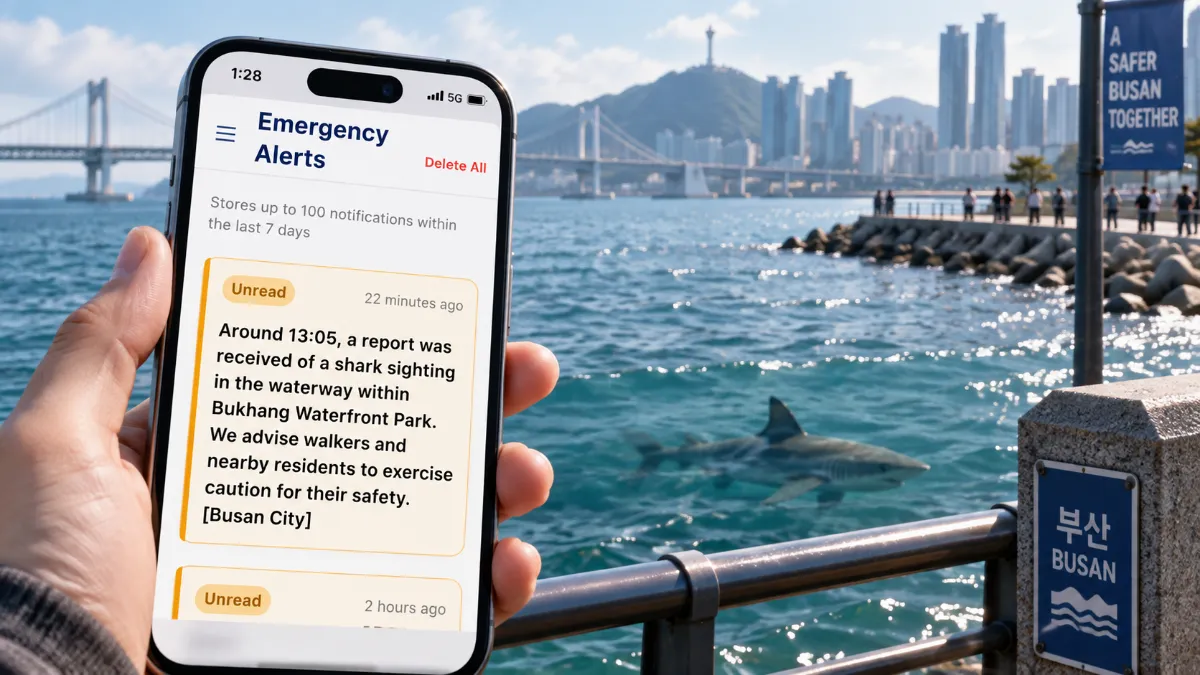
One emergency alert sent me looking beneath the surface of the city I live in. Living in Korea means getting used to phone alerts about heavy rain, high waves, heat, or the occasional wild boar. This afternoon, one arrived that felt different. At 13.28, Busan City warned that a shark had been reported shortly after one o'clock in the waterway at Bukhang Waterfront Park, close to Busan Port. People in the park were told to be careful. I live in a city surrounded by the sea. I see beaches, boats, harbours, fish on tables. Sharks had never really been part of that picture. This one was real enough. The previous morning, a shark between three and four metres had already been seen in the same place. Experts from the National Institute of Fisheries Science believe it is a copper shark, in Korean mutae-sangeo, also known as bronze whaler. Nobody knows yet whether it stayed overnight or another found its way in. The Coast Guard first tried to guide it back towards open water, but stopped after advice that cornering it could cause aggression. They are watching and waiting. That sounds dramatic, but the species itself is not an exotic accident. Copper sharks occur in Korean waters, alongside other temperate and subtropical seas. National data list around 49 shark species in Korean coastal waters. Encounters with people are rare. Researchers do note more sightings of large sharks along the east coast this year than last, and link that to warmer water and shifting prey. Off Gijang, just up the coast from Busan, researchers recorded 212 fish species in fixed nets, 71% classified as subtropical. The average sea temperature there is about 1.2 degrees higher than in 2000. That's background, not proof that one shark swam into a harbour because of climate change. Sharks follow food, and sometimes an individual ends up somewhere odd. Still, once you start looking below the surface, the sea beside Busan feels less like scenery. Squid, octopus and mackerel are everyday neighbours. Farther out are finless porpoises, and in summer, large jellyfish that cause more immediate trouble for swimmers than a shark does. I walk beside this water almost every week and still know so little about what is happening underneath. My next alert will probably be about the weather again. As I write this late Saturday afternoon, the most recent report still does not say the shark has left. The authorities are watching and waiting.
Norte: This story started with a simple emergency alert on my phone — and one screenshot that made me look at Busan’s sea a little differently.