
Where Did All the Old Things Go?
The article looks at why everyday old objects are easy to find in Europe but much less visible in Korea\. It explains this through Korea’s rapid modernization, its history of war and rebuilding, and different cultural attitudes toward keeping, reusing, and valuing older things
Where Did All the Old Things Go?
Where are all the “old things” in Korea?
Not museum pieces or royal artefacts, but the everyday layer: cups, tools, furniture, household objects that in Europe seem to survive almost by accident.
I notice it every time I come back to Europe.
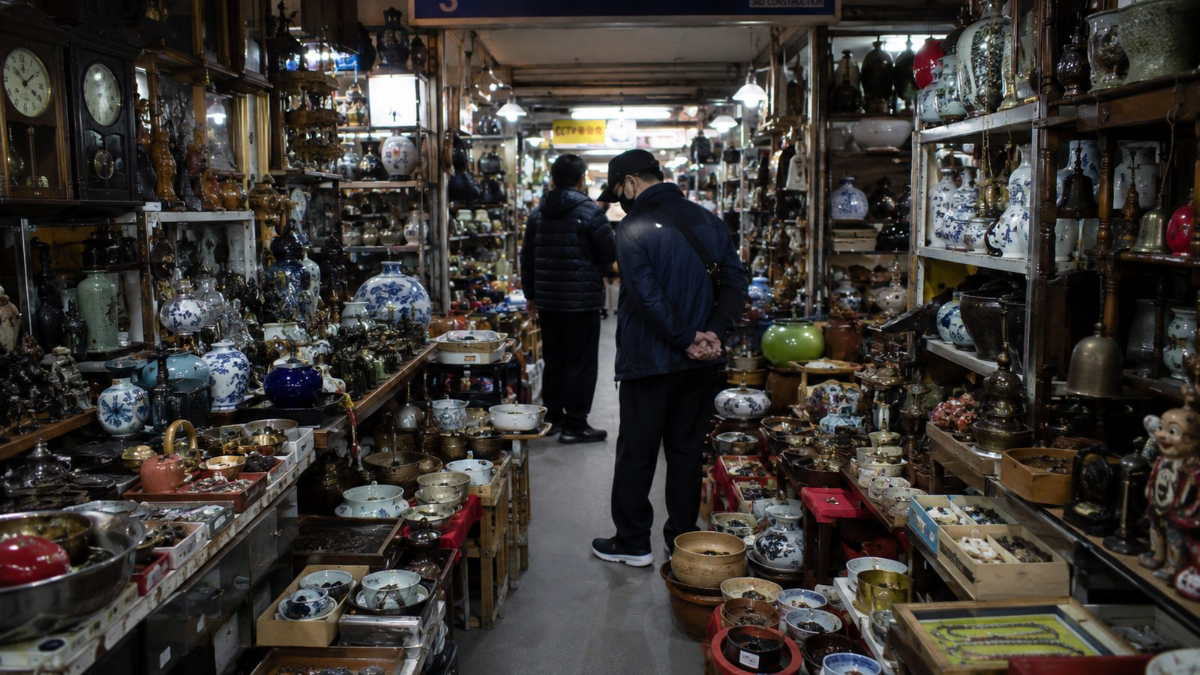
In the Netherlands, almost any town has a kringloopwinkel — a second-hand shop filled with fragments of other people’s lives. Plates that once sat in someone’s kitchen. A scratched wooden chair. A lamp from the 1970s. Books nobody quite wanted to keep, but nobody quite wanted to throw away either.
And then there is England.
This weekend I am going there with friends for The Big Dig, a metal-detecting event in a field. We will be looking for coins or small objects buried in the soil — maybe Roman, maybe more recent. The point is not value, but age. Something becomes interesting precisely because it is old.
Between those two experiences, the same question keeps returning:
Where are all these everyday “old things” in Korea?
Not in museums. Not in curated heritage. But in ordinary life.
Because this is not really a question about objects.
It is a question about what a society allows to remain visible from its past.
What a society chooses to preserve determines what still exists in it.
Old things do not simply disappear. They are kept, reused, sold, or thrown away. And each choice reflects a cultural relationship with time.
Korea does have second-hand — but it feels different
To be clear: Korea absolutely has a second-hand economy.
Phones, clothes, furniture, electronics — all of this is actively traded. Online platforms make reuse normal, and second-hand consumption is increasingly mainstream and widely accepted.
But what stands out is not the absence of reuse.
It is the absence of oldness as a form of value.
In Europe, something can become desirable because it is old. A chipped bowl can be “charming.” A worn table can be “authentic.” A slightly outdated design can become “vintage.”
In Korea, second-hand is often primarily functional. Efficient, practical, price-driven. Less about nostalgia, more about use.
That difference is subtle, but it shapes what survives.
The missing middle layer
Europe has built an entire ecosystem around everyday objects that outlive their first owner.
Charity shops. Flea markets. Antique fairs. Brocante markets. Vintage platforms. Entire systems exist around the idea that ordinary things can gain value simply by surviving.
In Korea, that middle layer feels thinner.
There is heritage — palaces, temples, ceramics, artworks — clearly defined as culturally important. And there is modern consumption, fast and efficient.
But the in-between layer — the everyday objects that quietly accumulate history — is less visible.
And that is where the real question sits.
Why Korea might be different
Part of the answer lies in history, but not only in the way people often assume.
The Korean War destroyed cities, displaced millions, and erased vast amounts of material life. In that context, survival mattered more than preservation.
But what followed may be just as important.
South Korea then underwent one of the fastest processes of industrialisation and urbanisation in the world. Cities expanded rapidly. Old neighbourhoods were demolished and replaced with apartment complexes. “New” became a visible sign of progress and stability.
In that environment, old objects were often not seen as something to preserve, but as part of a past people were moving away from.
Not because they were meaningless — but because they were associated with hardship and scarcity.
And that changes how a society relates to material things.
When “old” is not yet “valuable”
In Europe, we have developed a language that transforms age into value.
Antique. Vintage. Retro. Collectible. Mid-century.
These words elevate objects that might otherwise be considered outdated. Age becomes a form of worth.
But that only works when a society has the luxury of looking back without feeling pulled back.
In a rapidly modernising society, “new” carries a different emotional weight. A new apartment, new appliances, new infrastructure — these are not just preferences, but symbols of having arrived somewhere better.
So instead of old objects slowly becoming charming, they are more likely to be replaced.
Not because they are rejected, but because they are not yet reinterpreted.
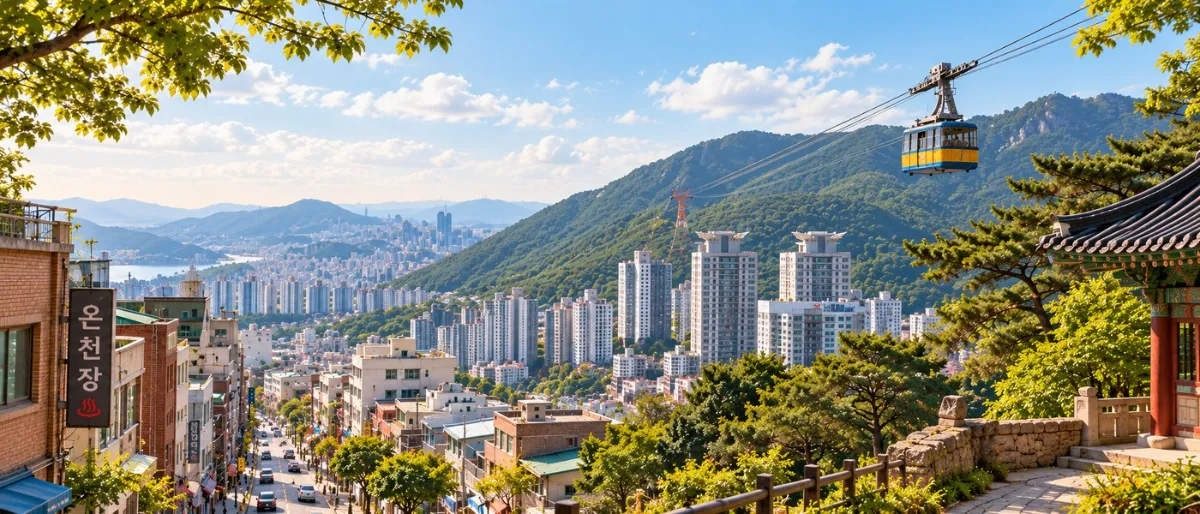
Busan: where the layers overlap
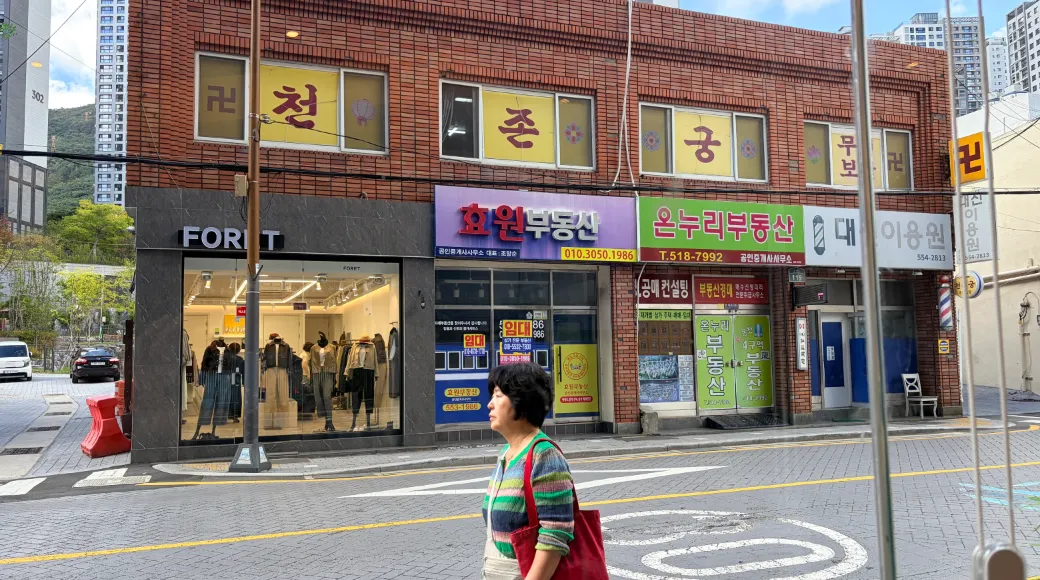
Busan makes this question more concrete.
Gukje Market in Nampo-dong is one of the clearest places where Korea’s material history becomes visible. It grew out of the upheaval of the mid-20th century — after liberation, when goods left behind by departing Japanese residents were sold, and later during the Korean War, when refugees and foreign military supplies flowed into the city.
It was a market built on movement, survival, and reuse.
Even today, Gukje Market feels different from modern retail spaces. Not a curated “vintage experience,” but a living environment shaped by trade and adaptation.
Nearby, there are also donation-based second-hand shops such as Beautiful Store, where used goods are resold for social purposes. These exist, but they do not define the urban landscape in the way European charity shops often do.
So the old layer is not absent.
It is simply less structurally embedded.
A shift that may already be happening
And yet, something is changing.
Younger Koreans are increasingly interested in vintage fashion. Second-hand platforms are widely used. Environmental awareness is growing. Objects once seen as simply “used” are being reframed as “retro” or “unique.”
This matters, because it shows that the meaning of “old” is not fixed.
It evolves with economic stability and cultural distance.
What once represented poverty can, a generation later, become aesthetic.
We see this in Europe too. But in Korea, the shift feels more recent — and therefore more visible.
The real difference
In the end, this is not really a story about second-hand markets.
It is a story about time.
In Europe, time accumulates in objects almost by default. Things are kept long enough to become interesting again.
In Korea, rapid transformation meant that time often moved too quickly for that layer to form in the same way.
So the difference is not that Korea has no old things.
It is that the relationship between time and value has been different.
What a society chooses to preserve determines what still exists in it.
Looking forward
This weekend, somewhere in an English field, I might find nothing at all. That is usually how it goes.
Or I might find a small object that someone lost hundreds or even thousands of years ago — something that survived simply because it was never found again.
And that makes me think again about Korea.
Not as a place without old things, but as a place where the definition of what is worth keeping has been shaped by a very different history.
And perhaps that is already changing.
Perhaps in a few decades, someone will walk through a Korean flea market and feel what I now feel in the Netherlands: that quiet sense that other people’s past is still physically present in everyday objects.
Not in museums.
But in things that were simply never thrown away.