

Busan has more quiet than you think
Inside ONDO's Eco Resonance, a quiet afternoon on Eulsukdo island: what it costs, what it skips, and why the calmest tour in Busan might be the most honest one.
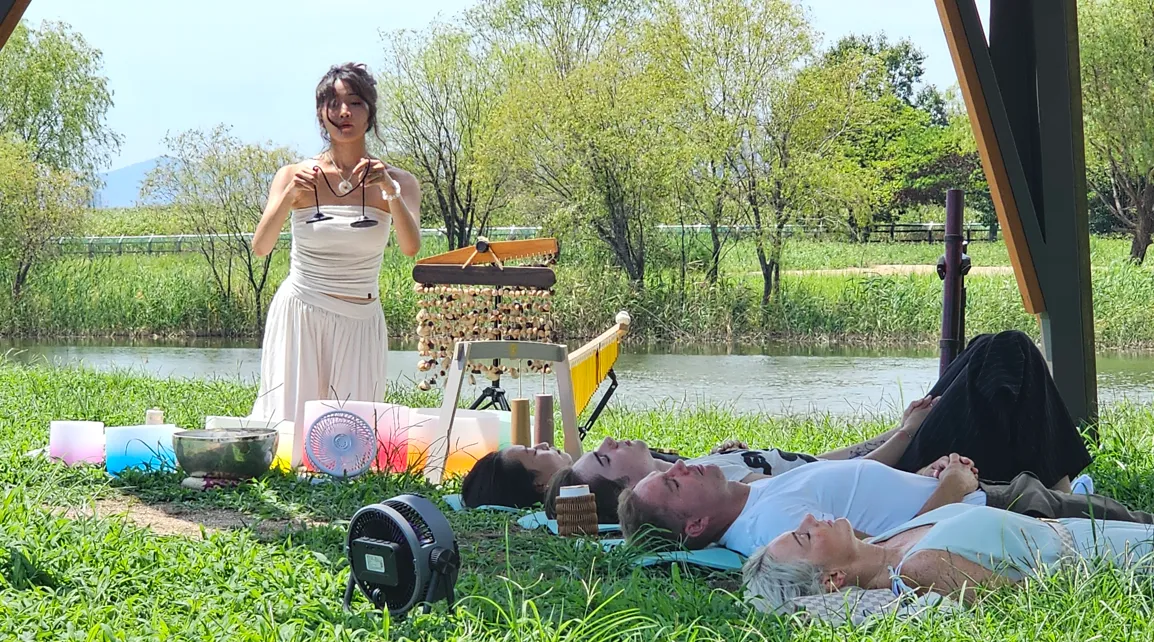
Inside ONDO's Eco Resonance, a single afternoon built around one idea: don't see Busan, feel it.
Ask most people what Busan sounds like and they'll describe Gwangalli Beach at sunset, or the vigorous ajummas at Jagalchi Market, or the little prince at Gamcheon Culture Village. It's a loud, generous, extroverted city, and most of its tourism sells exactly that. I've lived here long enough to have done all three, more than once, with visiting family in tow.
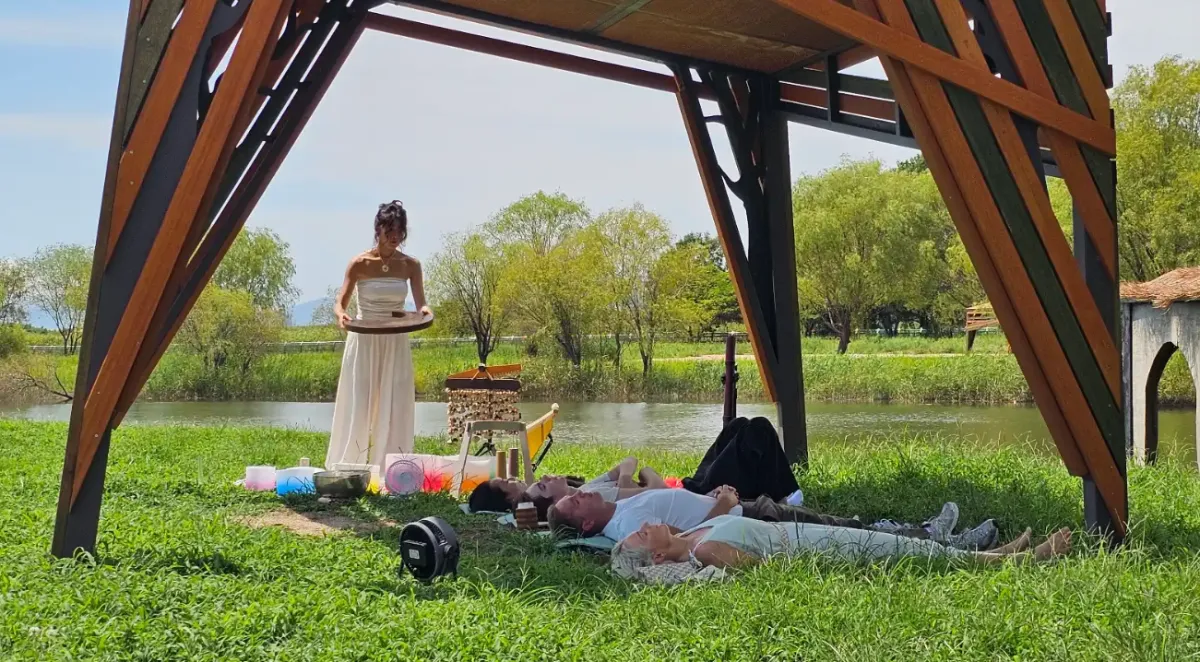
ONDO, a Busan-based operator running small-group experiences under the idea that "we don't just show you Busan, we want you to feel it," has built its first public offering around the quieter side of the city. Eco Resonance takes a handful of travelers to Eulsukdo, an eco island at the mouth of the Nakdong River in Saha-gu, for an afternoon that is, on paper, peacefully uneventful: a walk, some birds, a quiet building no guidebooks feature, and a closing settling of sound. There's no itinerary crammed with stops. That's the point.
The founder's actual definition of luxury
ONDO's own brand materials are unusually specific about what they're not trying to be. "Real luxury," the founder has said internally, "is not having to worry." Not a suite. Not a price tag. Not a menu of treatments. It's transportation already arranged, a group small enough that no one is managing anyone else's experience, and a place chosen for what it means, not for how it photographs.
The company's stated audience is the independent traveler who already knows Seoul, or Tokyo, or Bali, and has stopped being impressed by flashy lights and alluring scents, not the first-time luxury traveler chasing five-star signifiers.
Every ONDO journey, including this one, moves through the same five beats: Arrive, Discover, Connect, Restore, Remember. It's a rhythm, a way of learning the place, not a checklist. The company is explicit that "the activity can change, the feeling shouldn't."
Why Eulsukdo, specifically
The choice of location isn't neutral. Eulsukdo was designated a protected migratory bird habitat back in 1966, genuinely one of the most significant such sites in Northeast Asia at the time, and then spent the following decades absorbing the cost of a growing city: a river barrage in 1987 that disrupted the tidal flow the estuary depended on, land reclamation, industrial and agricultural runoff, even a period as a landfill site. By the 1990s, it was a protected place that had been allowed to fall apart.
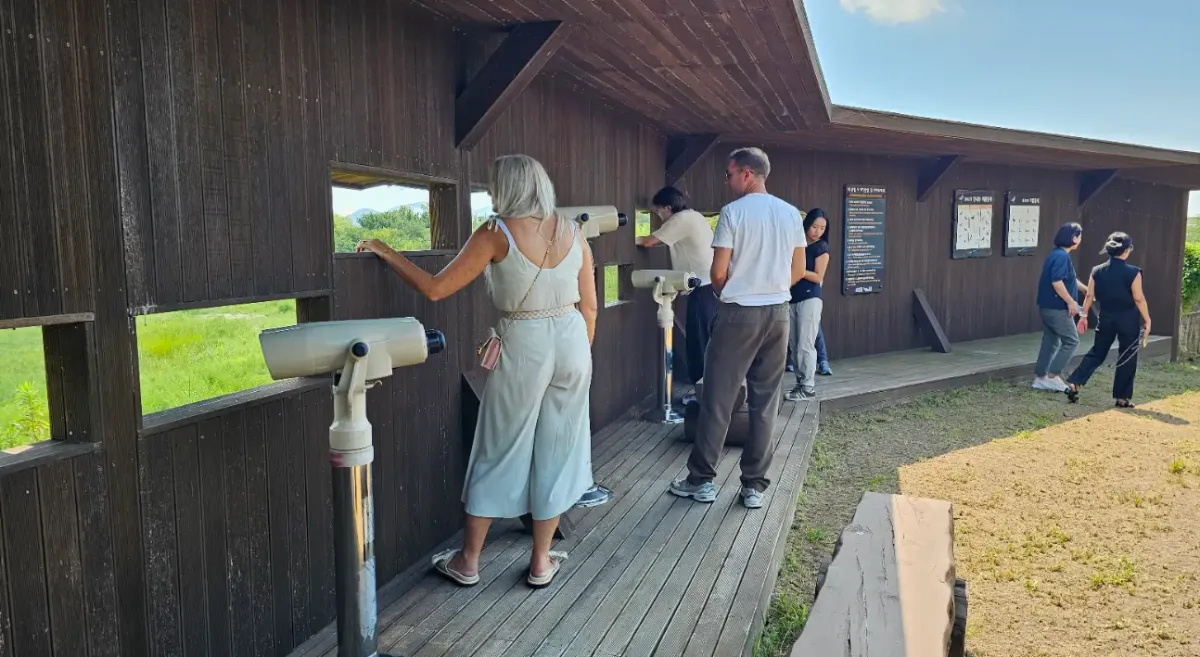
What followed was a genuine, if messy and years-long, restoration effort: wetlands rebuilt, landfill areas remediated, an education center opened in 2007, more work continuing into the 2010s. It's not a finished story. Busan's own account of "recovery" sits alongside more cautious assessments from the conservationists who worked on the original restoration, who now describe an estuary that's "internationally important" but still diminished compared to twenty years ago.
ONDO doesn't try to resolve that tension into a tidier narrative. It's somewhere actively, imperfectly, being brought back, not a pristine wilderness and not a ruin.
That's a more honest metaphor for "restore" than most wellness itineraries manage, and it's the whole design, not incidental.
The unexpected stop
Partway through the afternoon, the group visits the Wildlife Medical Center, part of the Nakdong Estuary Eco Center, where Busan's Nakdong River Project Management Office treats injured and sick wild birds and mammals and works to return them to the wild. It's a working facility, not a photo backdrop, and it produces the kind of story a five-star hotel never will: a whooper swan named Yeoreumi, raised in part through the center's wild-adaptation program, has been GPS-tracked flying roughly 2,300 kilometers each way between Busan and Russia's Far East for two migration seasons running. Guests hear that story standing in the place it happened.
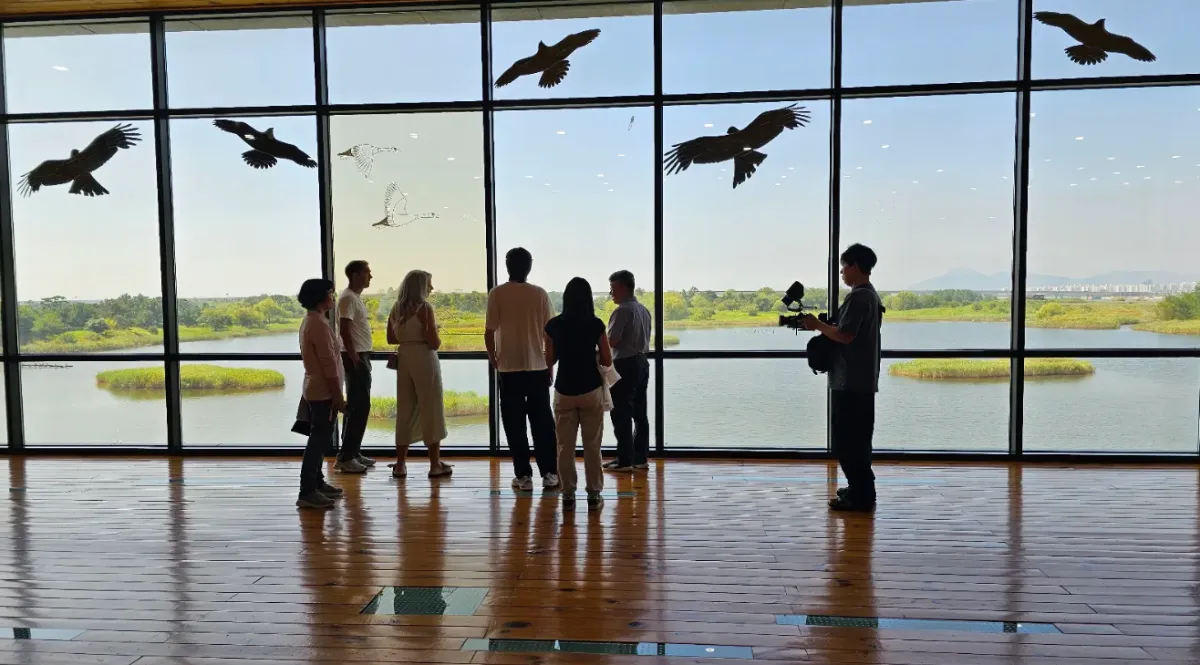
It's a strange, quietly moving beat to build into a tourism product. This stop skips the spa moment and the infinity pool. It centers on evidence that recovery, ecological or otherwise, is slow, specific, ongoing, and never only about the birds.
What it costs, and what it doesn't promise
Eco Resonance is currently offered at a ₩40,000 launch rate, against a ₩220,000 list price, for a single afternoon. No suite upgrade, no multi-day package, nothing here to compare against the usual luxury-travel math. ONDO's own marketing guidelines explicitly rule out language like "ultimate," "hidden gem," or "must-see" (a rule we could stand to borrow), and the founder has been just as explicit that the job is arranging things so a guest can find a place beautiful on their own, not telling them it is.
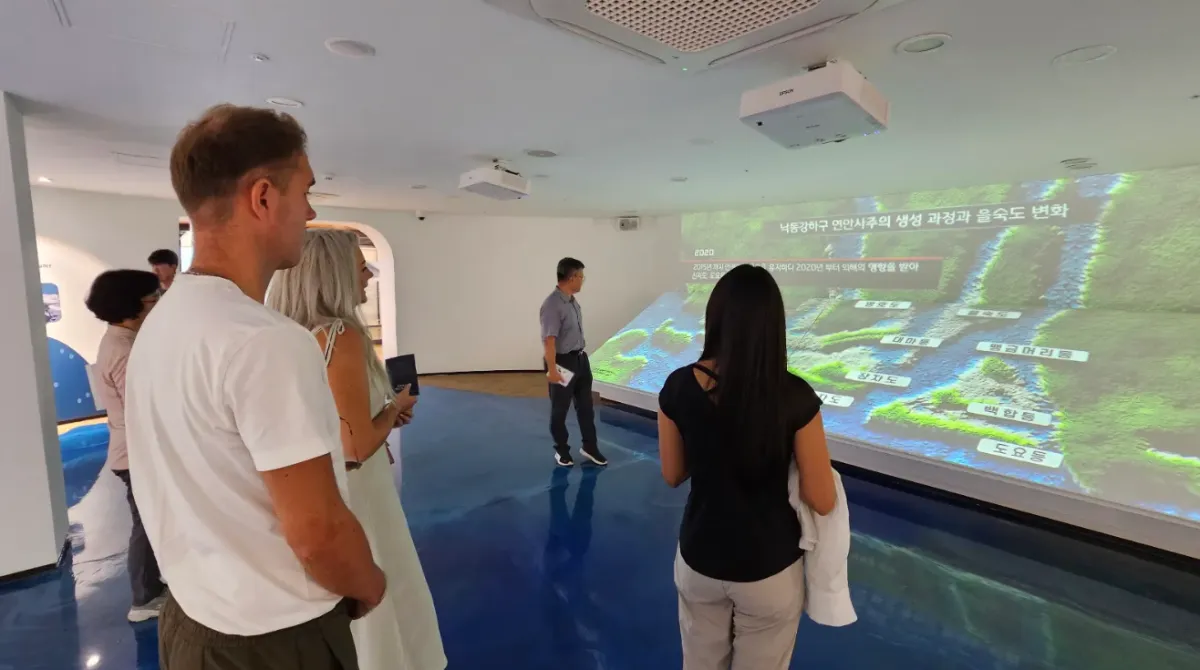
Whether that's worth an afternoon in a city with better-lit beaches depends on what a traveler's actually looking for on this trip. But for anyone whose last few luxury vacations already photographed well and still didn't feel different enough: Eulsukdo is still being repaired, and it's just asking for a couple of hours of your attention. No staging required. In Busan, that turns out to be a rarer offer than any rooftop bar.
Follow ONDO on Instagram @ondotournwellness for their next departure dates. And if quiet, unglamorous corners of Busan are more your speed than another sunset selfie spot, our OurBusan directory keeps a running list of those too.